
How much fabric do I need for a salwar kameez?
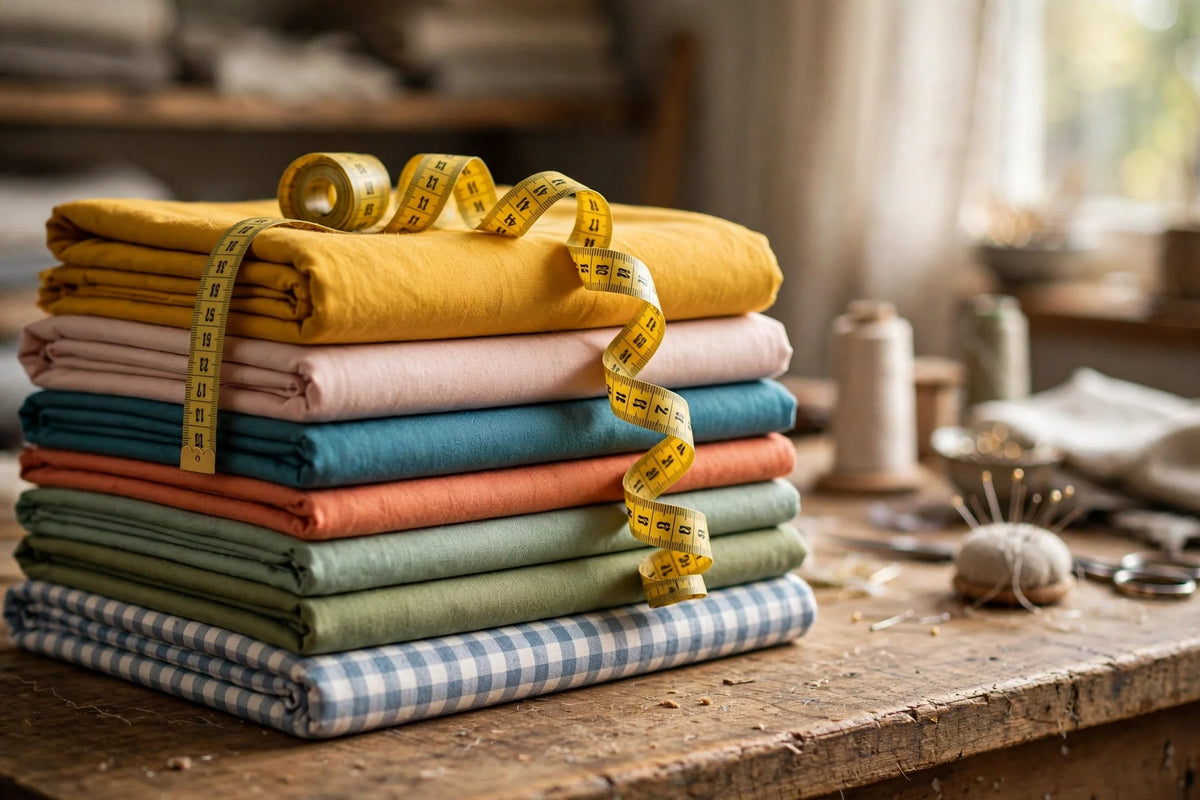
Before you buy a metre of suiting, settle one thing first: the pana. The pana is the width of the cloth measured the short way across, and while the length runs the long way and can be as long as you like, the pana is what decides how much you buy. It is the first thing I sort out with you in the Choosing Fabric lesson, because "how many metres" means nothing until you know the width. For a full salwar kameez in the standard 40-inch pana, keep five metres on hand. If the cloth is the wider 60-inch pana, three and a half metres is enough.
You will probably ask for metres first and check the width never, which is backwards. Two rolls can both be sold as suiting while one is 40 inches wide and the other is 60.
That 20-inch difference is the only real difference between the two widths.
The two widths you will meet
On the narrower 40-inch cloth a single kameez takes about two to two and a half metres, and you must fold the length double to cut the suit from it. The sleeves come out of what is left beside the panels, and if the leftover runs short you can add a joint to the side fabric and still make the sleeves. On the 60-inch cloth a kameez takes about one and a half metres, and you do not fold the length double at all, because the extra width lets you fold four times across the width instead.
As a rough split for the whole suit:
- Kameez — about 2 to 2½ metres
- Salwar — about 2 to 2½ metres
- Dupatta — about 2¼ metres (optional)
Add a matching dupatta and the three pieces come to roughly six and a half to seven and a quarter metres. These are working figures rather than tailoring law. Your length, the fabric width and the print will move them a little.
Before you pay
Cloth in the shops commonly runs about 44 inches or 58 to 60 inches wide, so check the width on the roll before you work out your metres. Wider cloth often means you need less length. Hold the fabric to the light because a see-through cloth will need a lining. Then rub a corner with a damp tissue because colour that comes off in the shop will bleed in the wash. Make sure the threads run straight along the length, since cloth cut off-grain will never hang right however well it is stitched.
When in doubt, buy a little extra from the same roll. Dye lots differ from roll to roll, and the extra half metre you bring home today costs less than a second trip for cloth that does not match.
One more thing for your first suit, and it matters more than the metres. Buy cotton and only cotton. It sits still under the scissors and sets easily with the iron, and it forgives you while you learn. Save the chiffon and the satin for suit number two.
With the cloth home, the next step is cutting it with confidence. Draft & Cut Your Punjabi Suit teaches the full cutting method on video, from the folded length to finished kameez and salwar pieces, for $139 with lifetime access.
Know someone making a suit? Send them this answer.
Who answered
Gaani
Gaani teaches you to measure, draft, cut and stitch a Punjabi suit — in Punjabi, step by step, filmed at her own table.
Questions about this answer