
Which Needle Size Should I Use for Different Fabrics?
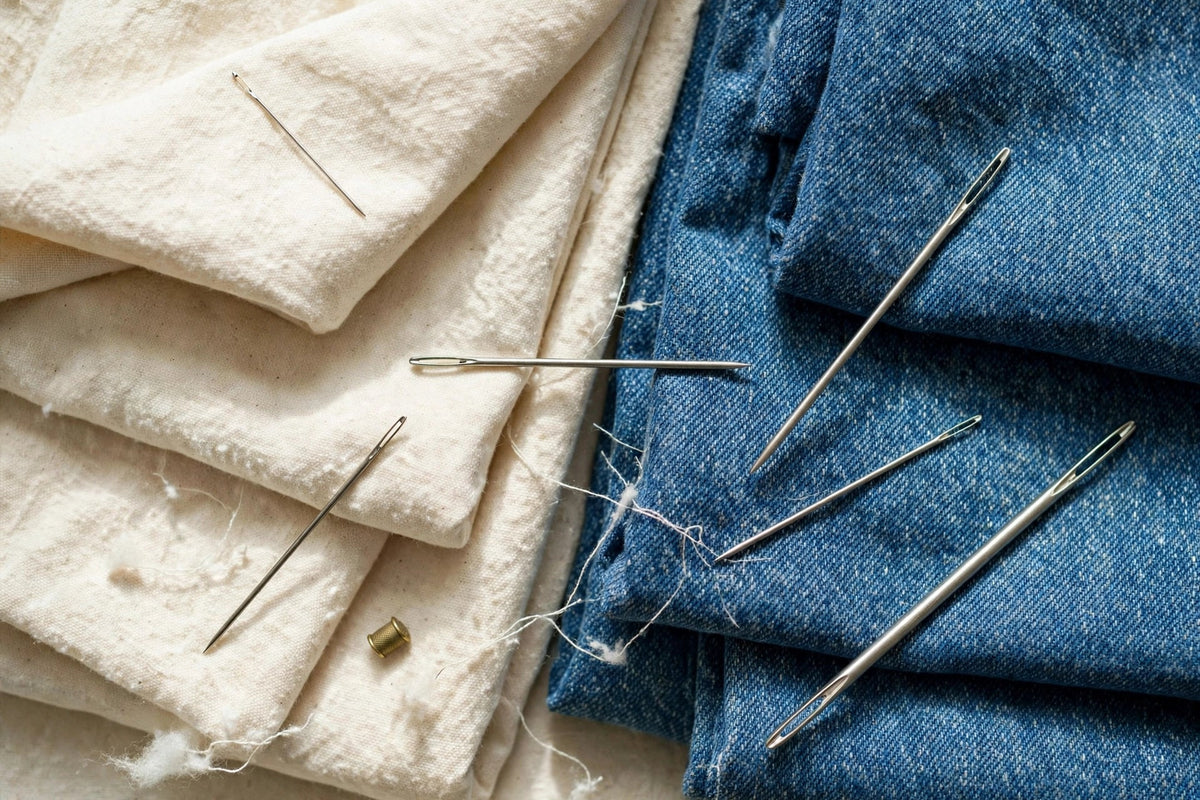
The photo of the crime scene landed in my DMs: a viewer had sewed jeans with the needle it came with. It snapped on the third seam and flew across the room! Ever had that happen mid-seam? I laughed, then I told her what I'd tell anyone.
The short answer's easy. Use 80/12 universal for regular cotton, 90/14 for denim and heavy fabrics, 70/10 for fine fabrics, and ballpoint for knits. Change the needle every 8 hours of sewing, because a bent needle causes skipped stitches long before it breaks.
How to read the numbers
80/12 looks like a secret code, but it's two number systems for one thing. 80 is European and 12 is American, so bigger always means thicker. And that's the entire system. Nobody remembers both, so everyone just says "eighty-twelve."

The four needles you actually need
Forget the 100-needle set and start with these four. These are the four I keep in my own box. Start with 80/12 universal, the daily driver for cotton, polycotton, lawn and the next kameez. If one pack is all you're buying, make it this one.
For jeans, canvas and thick salwar fabric, move up to 90/14, universal or denim for anything where the 80/12 starts sounding "crunchy". For chiffon dupattas, silk and fine lawn, drop to 70/10 sharp or microtex because a thick needle on chiffon leaves visible holes — a special kind of heartbreak.
And for anything stretchy or knit, I switch to a ballpoint in 80/12 or 90/14. A regular sharp needle cuts knit fibres, but a ballpoint pushes between them. That's the difference between a seam that survives and one that pops the first time you sit down.

Signs your needle is done
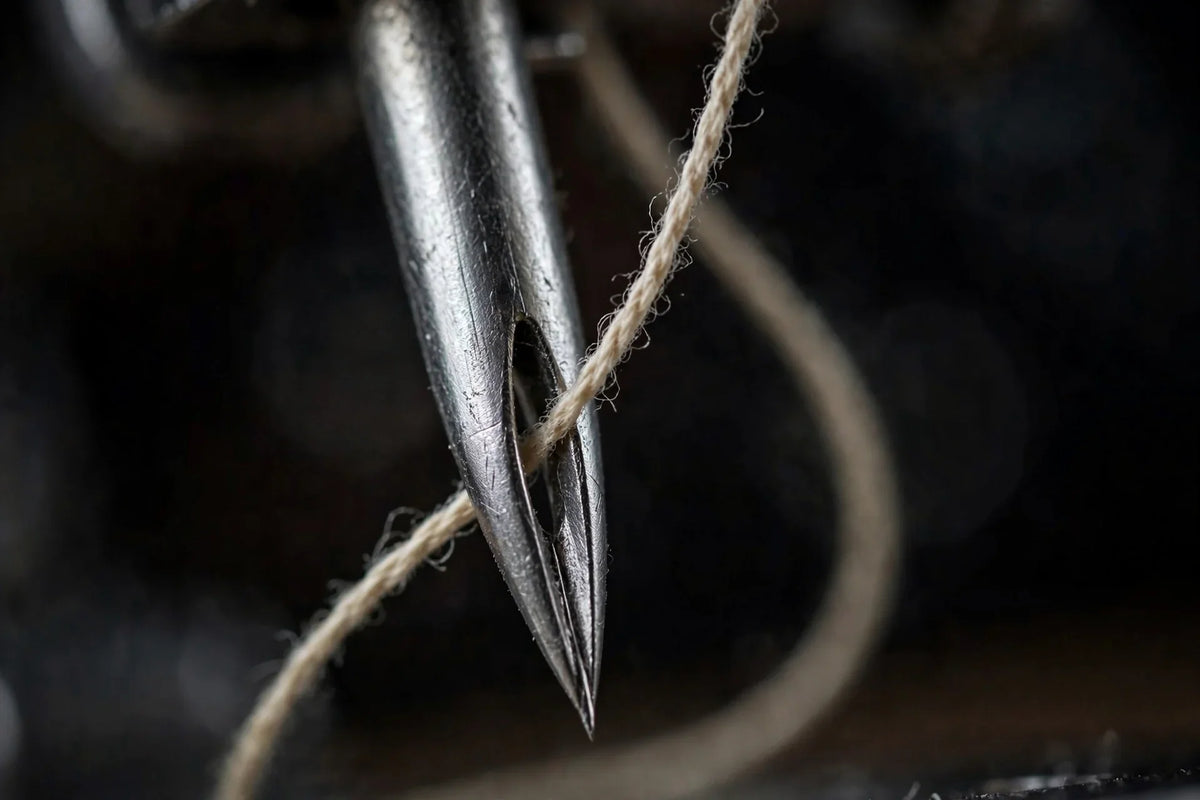
A dead needle usually tells on itself. Skipped stitches, a popping sound as it pierces, thread shredding at the eye, and tucks or puckers that weren't there last week. The needle is a $0.50 part doing a crucial job, so when in doubt, change it! It's the cheapest fix in all of sewing, and people will troubleshoot for three hours before trying it.
Matching needles to a Punjabi suit
A full suit crosses three fabrics, so this is where the matching really matters. In my suit course we keep it simple with one size 14 for the whole suit and the fabric-specific matching saved for later. But beyond the course, expect two needle changes mid-suit at about 40 seconds each. The seams will thank you.

Twin needles and specialty needles
Not yet. Twin needles (two needles on one shank) make the double rows of stitching you see on ready-made hems, and they're lovely, but they're a month-six purchase, not a day-one one. Same for leather needles, embroidery needles and the seventeen other types in the display case. Master the four basics first, because specialty needles solve problems that don't exist yet, and buying them early is probably how a sewing box ends up with $40 of untouched needles.
Your First Sewing Machine & Practice Shirt walks you through that first machine setup stitch by stitch. $79, lifetime access, and you finish with a shirt you actually made.
Buy the 5-packs, label each with a marker, and keep the little plastic cases they come in. Future you, swapping a fresh 80/12 at the first skipped stitch instead of spiralling, says thank you.
Know someone making a suit? Send them this answer.
Who answered
Gaani
Gaani teaches you to measure, draft, cut and stitch a Punjabi suit — in Punjabi, step by step, filmed at her own table.
Questions about this answer