
How Often Should You Oil a Sewing Machine?
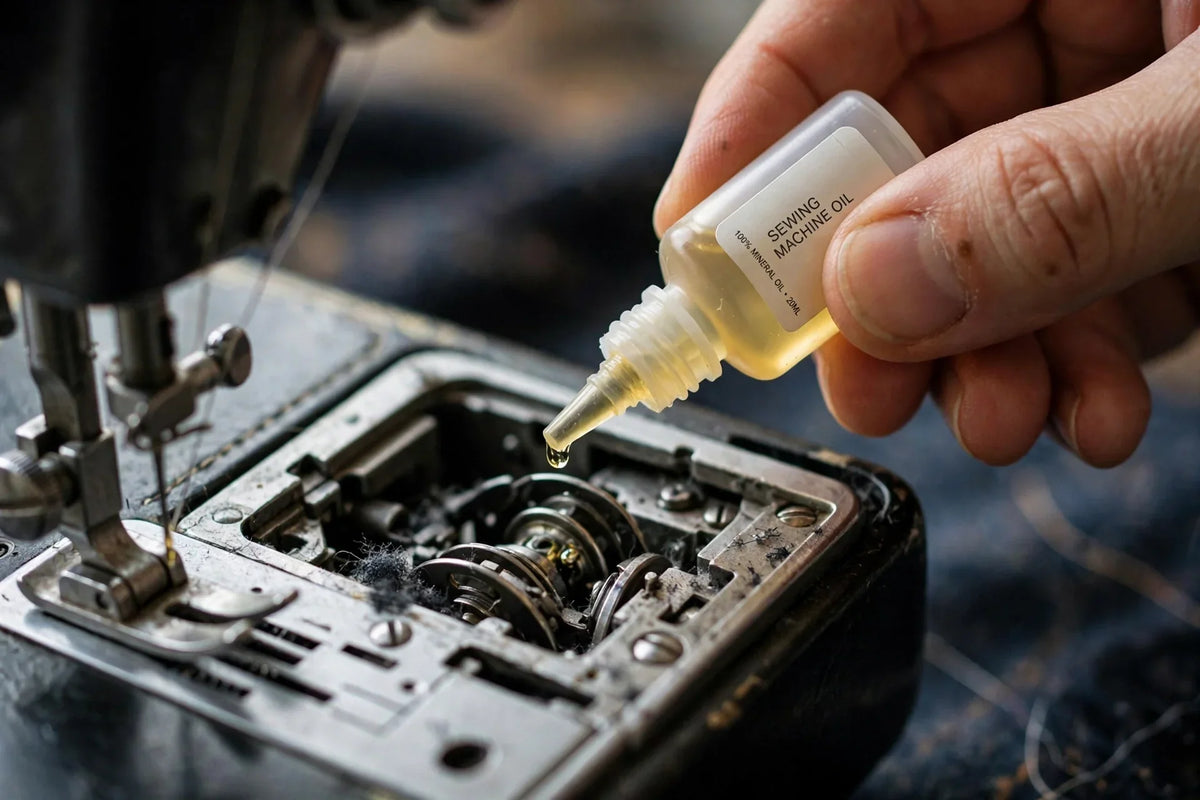
That gravel-chewing sound means the machine needs oil. A sewing machine is a few dozen metal parts sliding against each other thousands of times a minute, and when they run dry, that gravel-chewing sound is exactly what dry metal sounds like.
Here's the whole routine: one drop of sewing-machine oil on the bobbin race every 8–10 hours of sewing. Wipe away the excess. Run a scrap through after. And don't ever use cooking oil — it goes gummy, and a small job becomes a dealer repair.
The 8-hour rule
That's hours of actual sewing, not days of it sitting idle. You sew an hour most evenings? Oil it roughly every week and a half. A marathon weekend that finishes two suits earns an oiling right after. But heavy fabrics and dusty rooms probably shorten the interval, and cotton lint is usually the culprit. There's no prize for stretching it.

How to oil in 3 steps
First, unplug the machine. Non-negotiable!
Fingers near the needle mechanism with the power on is how bad stories start.
Next, take out the bobbin case. The crucial spot is the bobbin race, the metal ring the bobbin sits in, because that's where the thirstiest metal in the whole machine lives. Put the drop there. Resist the urge to add more! It seems too little until too much leaves oil spots on the scrap.
Then wipe the excess with a scrap of muslin, put everything back, and sew on a scrap for a minute to work the oil in. The goal is a light film, not a puddle. And check the scrap for oil spots before your good fabric goes anywhere near the machine.
Some modern machines are sold as "no oil needed". Mine isn't one, and if yours is, the manual says so in plain words. When in doubt, trust the manual, not a comment section (including mine).

What never to use
Cooking oil, olive oil, coconut oil, WD-40. I've seen all four suggested in comments, and all four end badly. Vegetable oils turn to sticky varnish inside the mechanism, while WD-40 is a solvent, not a lubricant. It strips the existing oil and leaves metal grinding on metal. Proper sewing-machine oil costs a few dollars and lasts years. So it's not the place to improvise.
Signs you are overdue
The machine gets louder, the handwheel feels stiff, and stitches start skipping for no reason. That's the machine asking politely. Ignore it long enough and it'll stop asking. The repair bill for a seized machine starts around $80, while the drop that prevents it costs about a cent!

What oil does not fix
Oil keeps a healthy machine healthy. But it can't fix a sick one. Bad timing, a bent needle bar and a feed dog worn smooth are dealer jobs, not oiling jobs. My rule of thumb is simple. If oiling and cleaning and a fresh needle haven't fixed it, stop. Every extra hour of forcing a sick machine risks turning a $60 service into a $200 one. Machines, like people, signal when they need a professional, so listen early.
Want me to walk you through your first machine setup, stitch by stitch? That's exactly what my Your First Sewing Machine & Practice Shirt course does ($79, lifetime access), and you finish with a shirt you actually made.
So oil it tonight. It takes 2 minutes, and tomorrow it'll sound like it did the day it came home. Future you, the one who's not paying for a seized bobbin race, says thank you.
Know someone making a suit? Send them this answer.
Who answered
Gaani
Gaani teaches you to measure, draft, cut and stitch a Punjabi suit — in Punjabi, step by step, filmed at her own table.
Questions about this answer