
Why Does My Sewing Machine Thread Keep Breaking?
Why Does My Sewing Machine Thread Keep Breaking?
It's 11pm. You're hemming a salwar for tomorrow, and the thread has snapped for the sixth time. You've rethreaded it six times, and you're glaring at the machine like it did it on purpose.
I've been exactly where you are, and years of it taught me that nine times out of ten, thread breakage is threading, the needle, or lint — not the machine, and not bad luck. Rethread the machine with the presser foot UP, because that single detail resolves more cases than everything else combined!
The 60-second fix
I call this the 60-second fix because that's all it takes once you know the path, so stop and breathe. Now rethread from the very top: spool, thread guide, down through the tension discs, up through the take-up lever, down to the needle. Keep the foot UP the whole time, and don't skip the take-up lever, the step everyone misses. Here's why the foot matters. Most people probably thread with the foot down, because it feels natural, but the thread never seats into the tension discs, so the top tension drops to zero and loops form underneath until something has to snap. The foot-up rethread is the crucial habit.

Your needle is the usual suspect
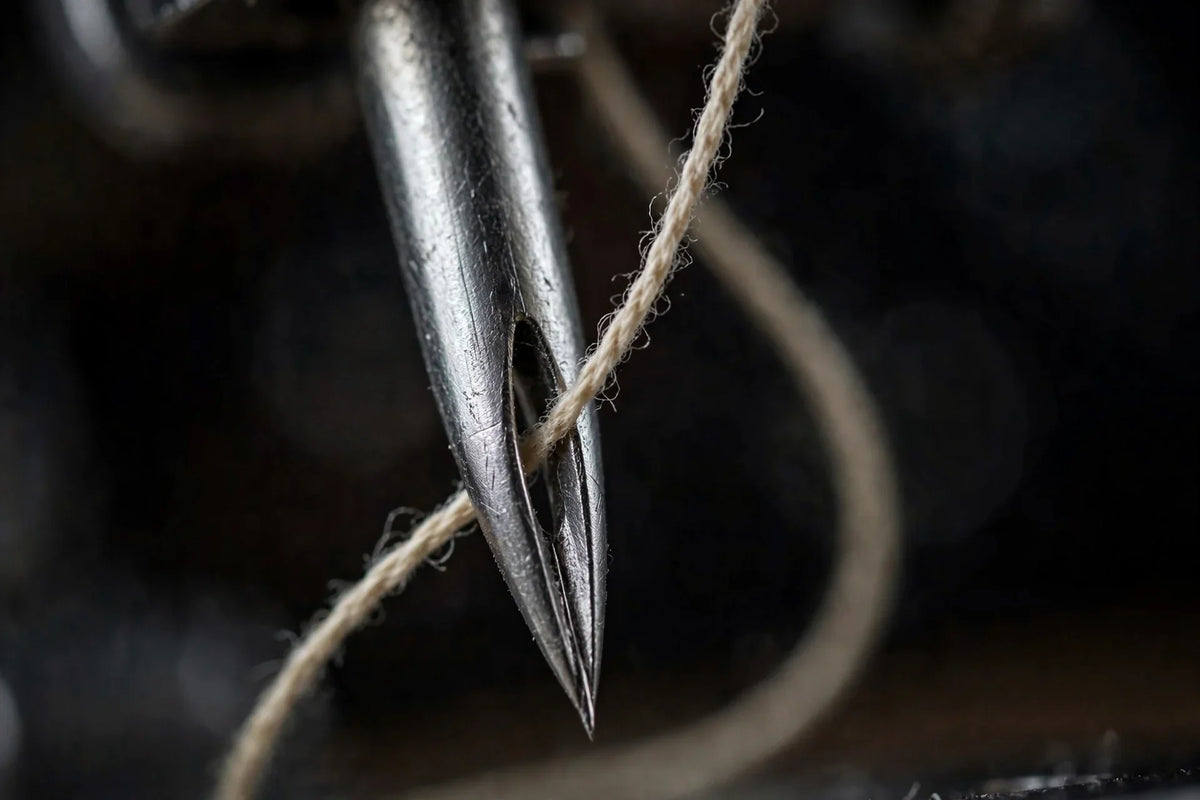
A needle should be changed every 8 hours of sewing, but nobody does it and everybody should! I try to stick to that. But a needle that has sewn 30 hours is microscopically bent and burred at the tip, and it shreds thread instead of piercing cleanly.
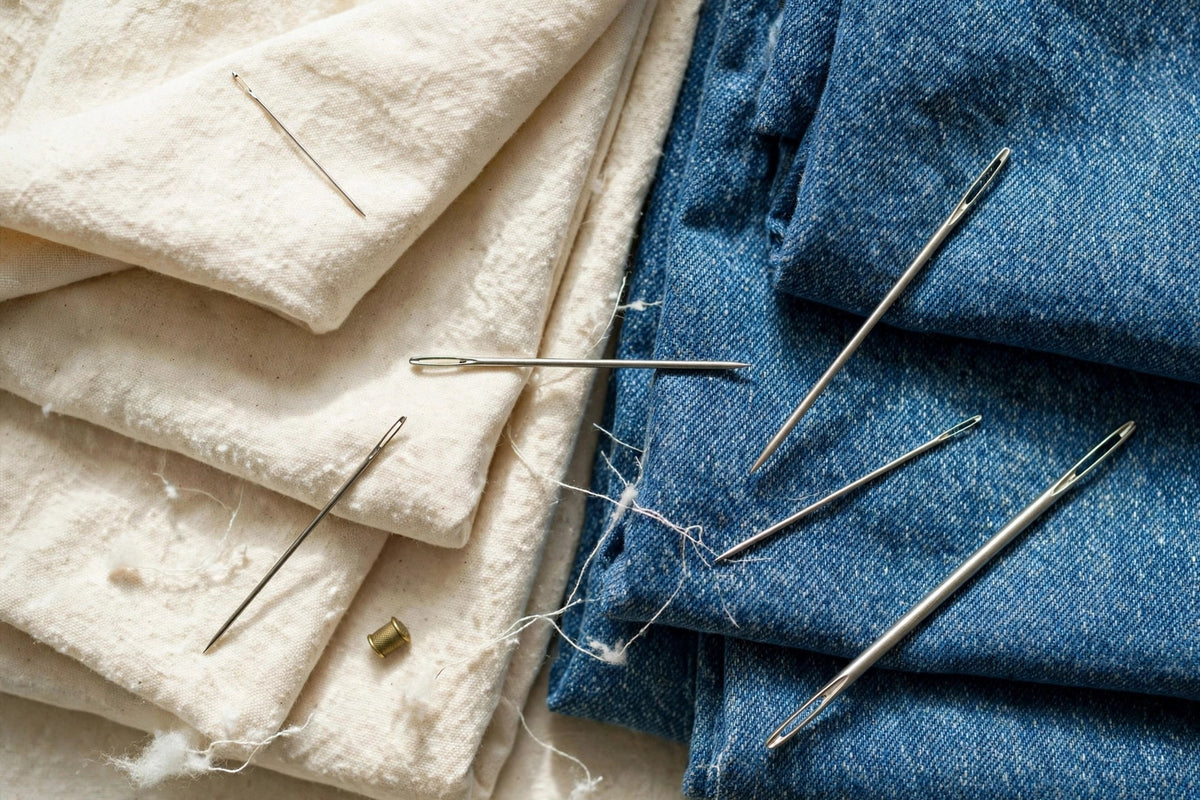
Check three things before you blame anything else: push the needle all the way up into the clamp, face the flat side to the back, and match the size to the fabric. An 80/12 trying to punch through denim will snap thread out of pure protest.
Leave the tension dial alone
The top tension dial should live at 4. Mine does, and I don't touch it. As my book puts it, "chasing these settings is how beginners spoil a good machine." The thing is, most people reach for the dial first.
If someone (a helpful relative, a curious child) has cranked it to 9, the thread is being strangled. Put it back where it lives. Now test it on a scrap. A quick diagnostic saves guessing. Loops on the bottom of the fabric mean the top thread is at fault, which probably means threading. Loops on top mean the bobbin side needs attention, so inspect that the bobbin thread is sitting in its little loop, because an unseated bobbin knots the underside of every seam.
Clean the bobbin area
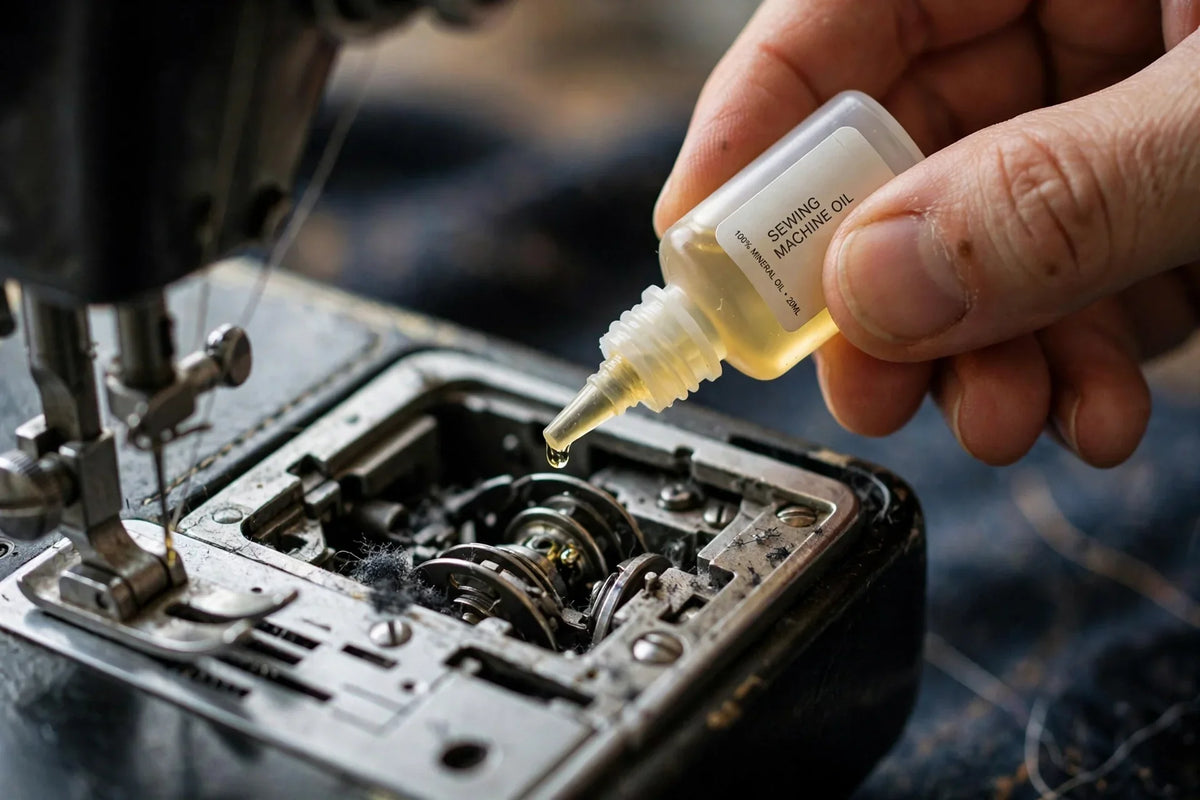
Take the bobbin case out and peer underneath at the grey felt of lint, months of thread dust packed around the mechanism. That's the single most common cause of the "my machine was fine and then suddenly wasn't" complaint in my comments. A small brush and two minutes resolves it, so do this every few projects. I think half of them never start.

When it is the thread itself
Old thread gets brittle, and bargain thread is uneven. If it snaps when you tug it, it'll snap in the machine too. Decent polyester thread costs a few dollars a spool, and it eliminates an entire category of misery.

The pre-flight checklist
Run this thirty-second check before every project. Change the needle if you can't remember changing it, and brush the bobbin area clean. Thread with the foot up. Confirm the tension dial is at its mark. And simply follow the thread through every guide.
Want me to walk you through your first machine setup, stitch by stitch? That is exactly what Your First Sewing Machine & Practice Shirt does — $79, lifetime access, and you'll finish with a shirt you actually made.
And if all five check out and it still snaps? Then it is genuinely the machine's timing, and that is a dealer visit, not a YouTube rabbit hole. I try the foot-up rethread first. So try it tonight.
It works an almost suspicious amount of the time!
Know someone making a suit? Send them this answer.
Who answered
Gaani
Gaani teaches you to measure, draft, cut and stitch a Punjabi suit — in Punjabi, step by step, filmed at her own table.

Questions about this answer