
Which Sewing Machine Should a Beginner Buy?
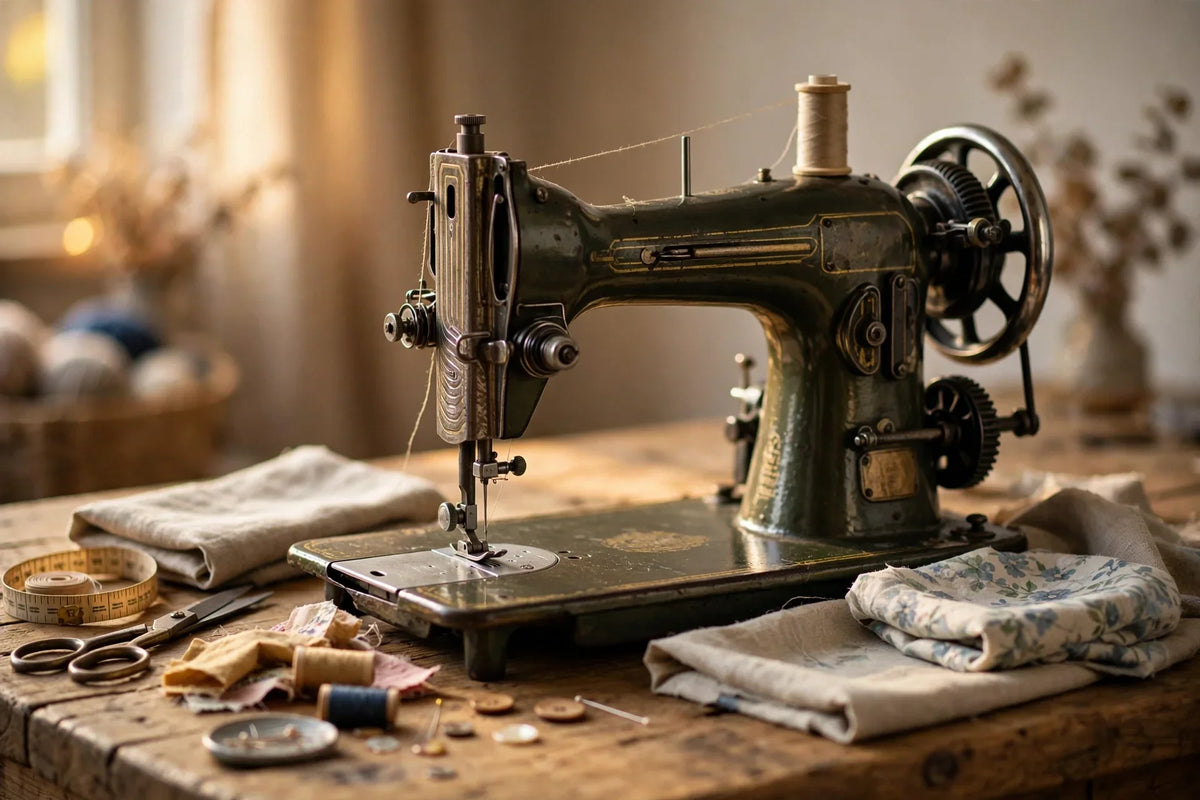
I get this question in my TikTok comments about eight times a week: "Sister, which machine should I buy?" Standing in a shop with forty boxes in front of you and every box promises it's the one, I've heard it so many times I could answer it in my sleep. Here it is. Buy a sturdy mechanical machine with metal parts inside, from a dealer who'll service it, and budget $200 to $350 CAD. That's the whole buying guide in two sentences. Everything below is the why.
What actually matters
Beginners shop by stitch count: forty stitches, sixty, two hundred, and the bigger the number on the box, the better the machine must be. Of the two hundred stitches on the box, four get used, and they are straight, zigzag, buttonhole, and one stretch stitch. I tell my students to ignore the stitch count before they buy anything, and I'll tell you the same.
But the box won't tell you what actually matters. A metal frame inside instead of plastic, a motor strong enough to push through four layers of denim without groaning, and a bobbin system that threads without a fight.
Pick the machine up in the shop. Feel its weight. If it feels suspiciously light, put it back! Because the metal frame is the thing you're paying for.

The machine I use in every video
So I teach on the Singer Heavy Duty 4411, the grey workhorse in all my videos. I filmed the 569,000-view hem repair on this exact machine, and it's sewn everything from lawn cotton to jean hems without complaint, and it lands inside that budget. (No brand pays me to say this. If Singer vanished tomorrow I'd say the same about any metal-frame mechanical.)
Mine stays on the straight stitch with length between 2 and 3 and width at zero. The tension sits at 4, and I leave it there, because chasing the tension dial is how beginners spoil a good machine. Don't touch it after that. The course shows an industrial Juki too, but it's optional, and every step works on the home machine.
Where to buy it
Get it from a local dealer who services machines, not the cheapest online listing, because a good dealer sets the tension before it leaves the shop and honours the warranty without a shipping saga. Forget the price for a second. The crucial point is who'll fix it when it breaks. Most dealers throw in a free getting-started lesson. That one lesson is probably worth more than the $30 saved by buying online.

What to skip
Now for the skips. Skip the ultra-cheap plastic machines if the plan is to stitch regularly, since they're fine for hemming curtains twice a year. But they're not fine for a Punjabi suit cut from six metres of fabric — the motor strains, the timing slips, and suddenly you're the person in my comments asking why the thread keeps breaking. (It is the machine. It was always the machine.)
And skip the computerized "deluxe" machines with 200 decorative stitches. All that money covers embroidery alphabets used exactly once, on a machine whose circuit board the local dealer can't fix. Maybe the stitch count sells machines, but it doesn't sew a better seam. That's a lot of money for a very pretty paperweight! You don't need an overlocker to begin, either. A zig-zag stitch on the home machine finishes raw edges perfectly well.
What to buy with it
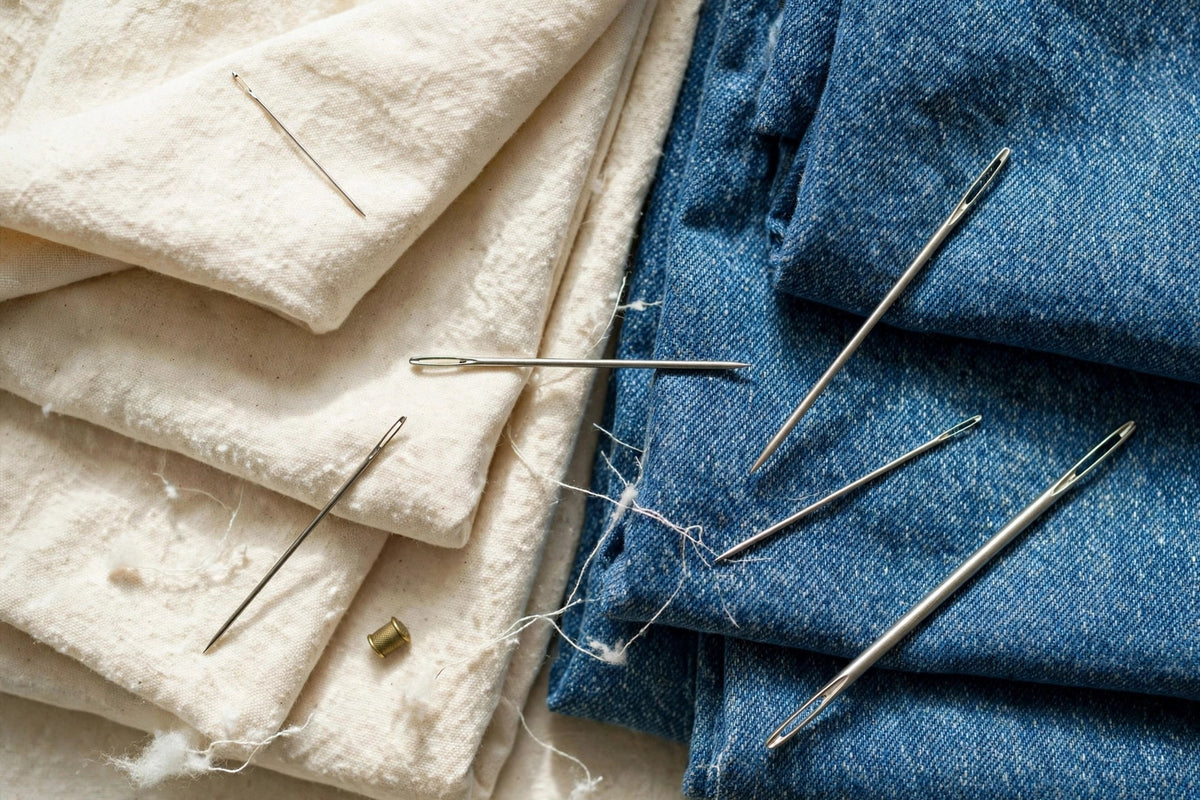
Start with a 5-pack of 80/12 universal needles, and know that suits get stitched on a size 14 once you're there. A few extra bobbins, because they vanish like socks and a wound spare saves stopping mid-seam. Decent polyester thread matched to your fabric weight, not the dusty bargain-bin spools. And an inch tape, because everything gets measured now.
Welcome to the club!
How to test-drive in the shop
Bring a scrap of denim and a scrap of chiffon. Dealers expect it, so sew a straight line on each and listen. Listen for a steady motor note instead of dipping and straining. Check that the stitches look even top and bottom, with no loops and no puckering. Turn the handwheel by hand and feel for smooth motion, not gritty little jumps. I think five minutes of this beats forty reviews.
Want me to walk you through your first machine setup, stitch by stitch? That's exactly what Your First Sewing Machine & Practice Shirt does — $79, lifetime access, and you finish with a shirt you actually made.
The best machine is the one you actually thread up and use. A $250 machine you sew on every week beats a $900 machine gathering dust. So buy the workhorse, then come learn on it.

Know someone making a suit? Send them this answer.
Who answered
Gaani
Gaani teaches you to measure, draft, cut and stitch a Punjabi suit — in Punjabi, step by step, filmed at her own table.
Questions about this answer